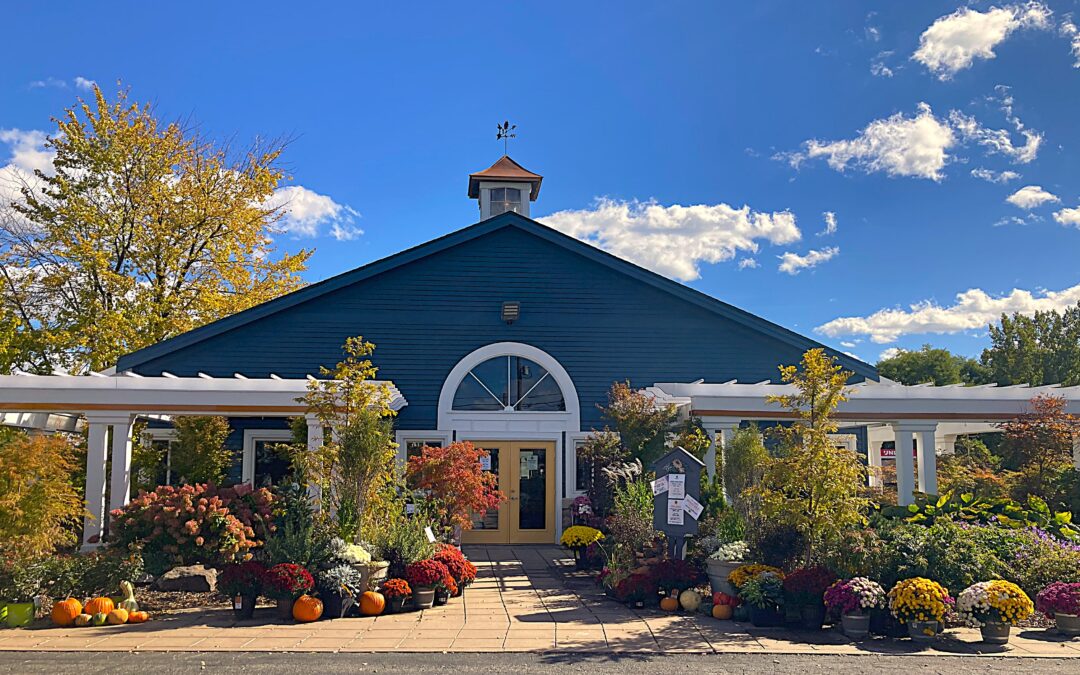


By this time each year, we have seen an amazing array of showstopping blooms and blossoms; but it’s not summer in West Michigan until the hibiscus shows up! Perhaps the biggest and boldest blooms of all, hibiscuses are famous for their “dinner plate-sized” tropical-looking flowers in vibrant colors. In West Michigan, mid-summer is high season for hibiscus, when these bold bloomers steal the spotlight in garden beds and borders.
A Tale of Two Hibiscus Cousins
Hibiscus varieties that can be planted outdoors in West Michigan’s Zone 6 climate fall into two distinct categories. While both rose mallow and rose of Sharon belong to the Hibiscus genus and share the family resemblance of showy blooms, they differ in form, habit, and garden use – especially in Zone 6.
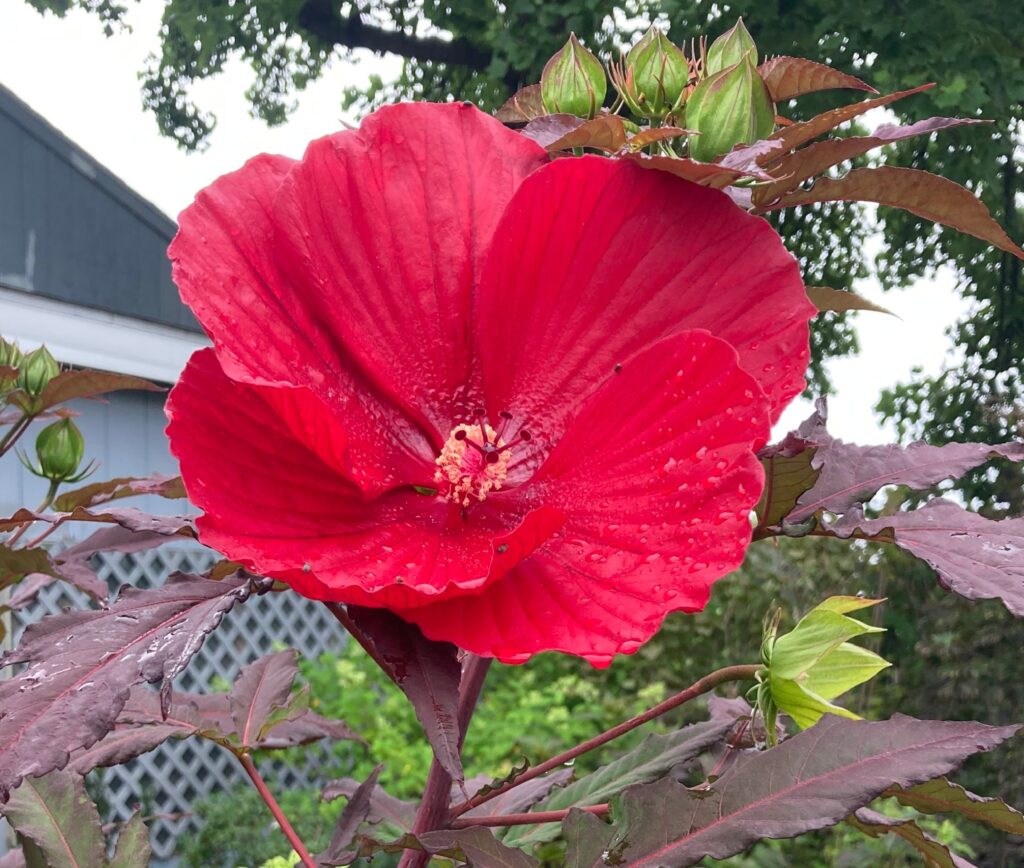
Rose Mallow is the drama queen of the perennial bed. Hibiscus moscheutos is known for large, trumpet-shaped blooms that range from 3″ to 10″ across. Lush foliage adds to the bold seasonal statement. The upright, bushy perennials can reach 3’ to 6’ tall and are ideal for rain gardens, borders, and pollinator-friendly plantings. Rose mallow dies back in winter and regrows in spring. Pile on the mulch in the fall and cut it down to about six inches from the ground in the spring.
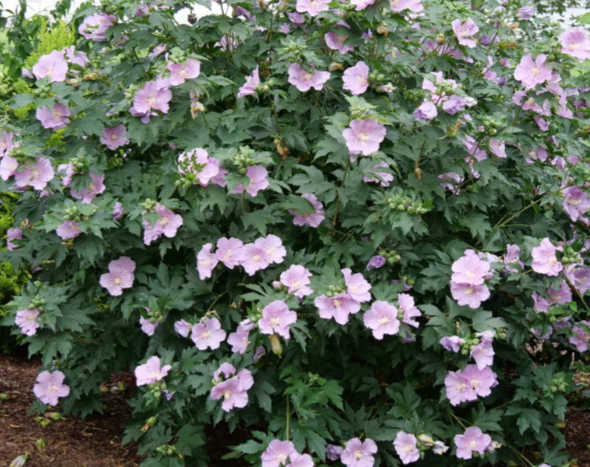
Rose of Sharon, on the other hand, is the reliable late bloomer. Hibiscus syriacus is a blooming shrub with woody structure and long-lasting, albeit smaller flowers, in the 2” to 4” size range. It makes a great hedge or specimen shrub and can grow to the height of a small tree – up to 12 feet tall! Rose of Sharon is also more drought-tolerant than rose mallow once established. In fall, rose of Sharon loses its leaves and the woody structure remains until new growth appears the following spring. Rose of Sharon may self-seed aggressively – deadhead to help control spread.
Mid-Summer is High Season for Hibiscus
Set them up in the right environment and your hibiscus of either variety should grow happily, and flourish in Zone 6 from mid summer until fall.
- Location: Full sun (6–8 hours daily) is essential for flowering.
- Soil: Moist, well-draining soil with a pH of 6.0–7.0.
- Watering: Keep soil consistently moist during growing season; reduce in winter.
- Fertilizing: Use a balanced fertilizer or one higher in phosphorus to boost blooms.
- Insects: Watch for Japanese beetles and aphids on both varieties; neem oil or insecticidal soap works well.
Hibiscus Varieties at Knapp Valley
Knapp Valley is featuring several varieties of rose mallow this season. Angel Eyes, one of the earliest hardy hibiscuses to flower, has 8″ bright white flowers with raspberry red eyes that radiate out through the petals. Broad green foliage on red stems makes up a well-rounded habit.
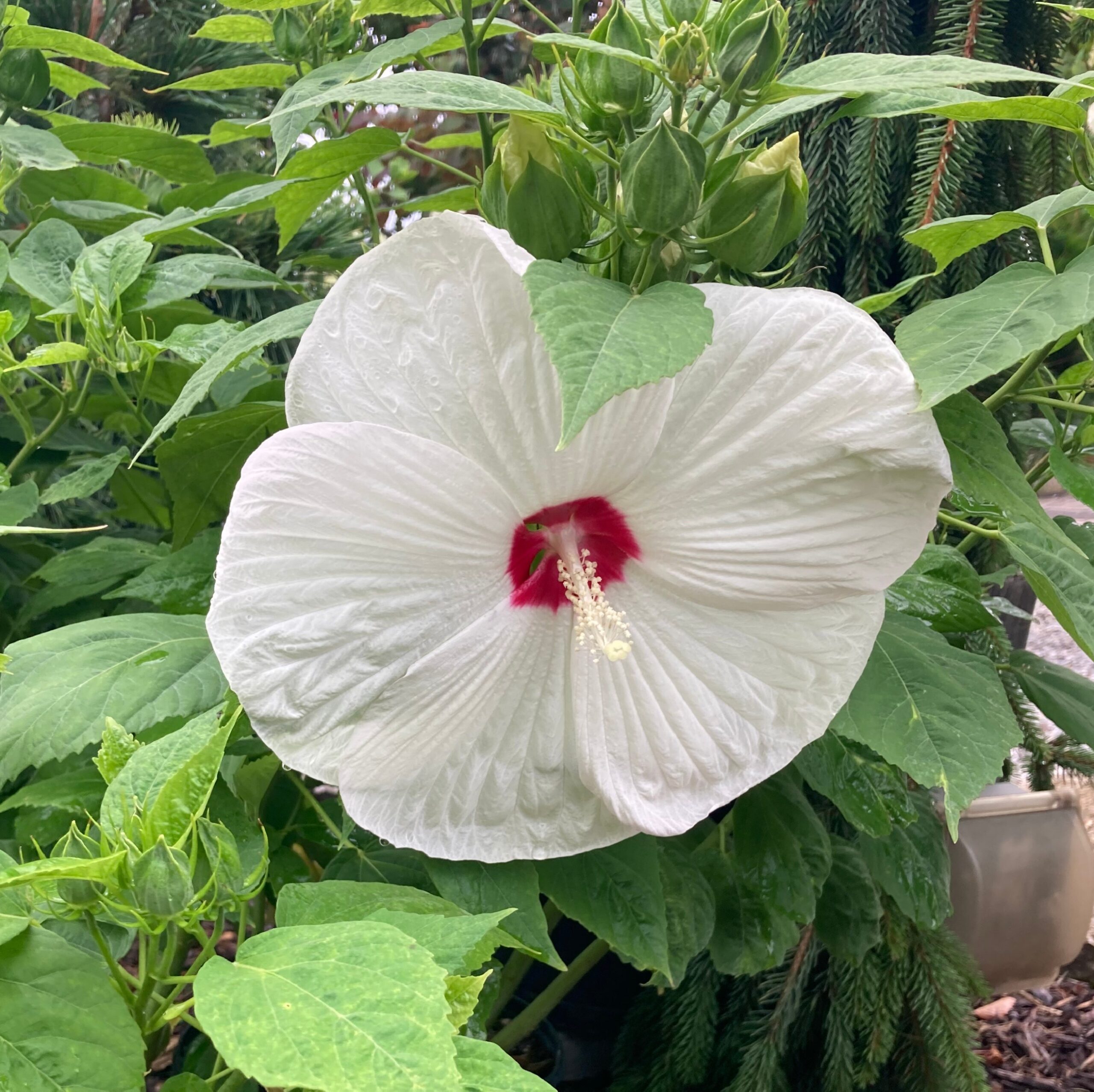
Luna White is compact but robust, with abundant snow-white flowers from mid-summer to mid-fall. The 8″ wide flowers have scarlet red centers from which clusters of white stamens shine. Flowers last just 1-2 days but are rapidly replaced by new ones each day.
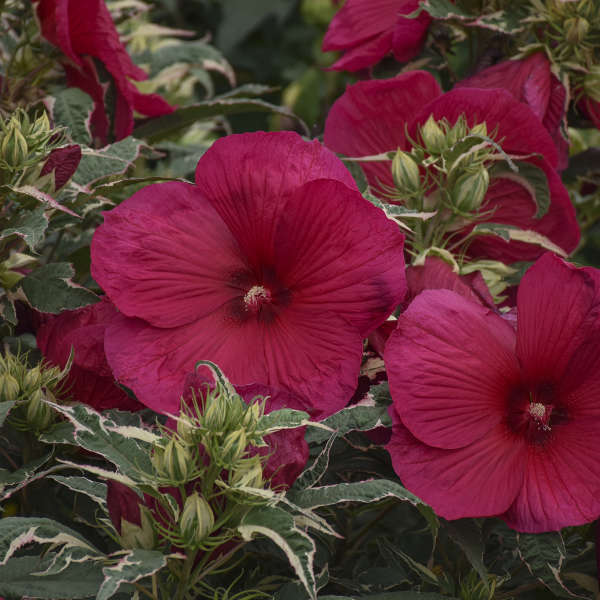
Summer Carnival’s large, dark magenta-pink flowers and striking green leaves with creamy white variegation and hints of pink make it a garden fave. This fast-growing, upright, and rounded cultivar can reach 4’ to 5’ tall and wide.
Midnight Marvel has large, intensely colored, bright red flowers with burgundy wine colored leaves. These flowers, up to 9” across, can start to bloom in late June, unfurling from numerous buds along the stems, rather than just at the top of the plant. These blooms may continue right up until the first frost.
Valentine Crush is prized for its large, bright cherry-red flowers that bloom in mid-summer. It features a sturdy, upright habit and is known for its ability to attract hummingbirds and other pollinators.
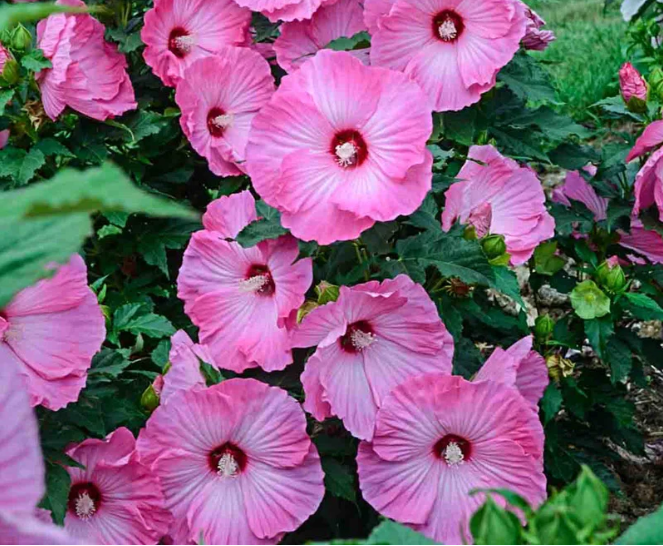
Airbrush Effect is pink with a white halo and darker pink eye which veins out across the petals, giving them that “airbrush effect.”
Our rose of Sharon varieties include Aphrodite, Double Pink, Minerva, Red Heart and Blue Satin.
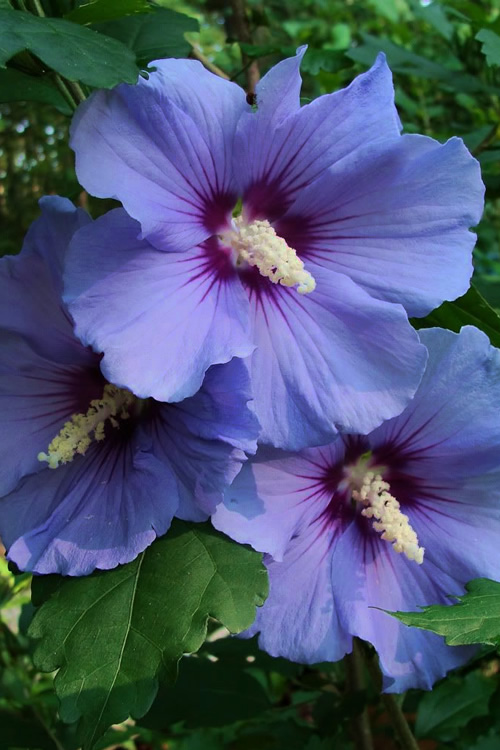
Blue Satin is quite unique with its violet-blue flowers with burgundy red centers. It grows 8 to 12 feet tall, blooms all summer, and produces virtually no seeds, making it a clean, low-maintenance landscape choice.
Whether you are thinking about rose mallow or rose of Sharon, enjoy reduced prices at Knapp Valley Gardens’ Summer Sale: Buy 3 Get 1 Free on all perennials and shrubs. Buy 4 of the same plant or mix and match – either way, you save!