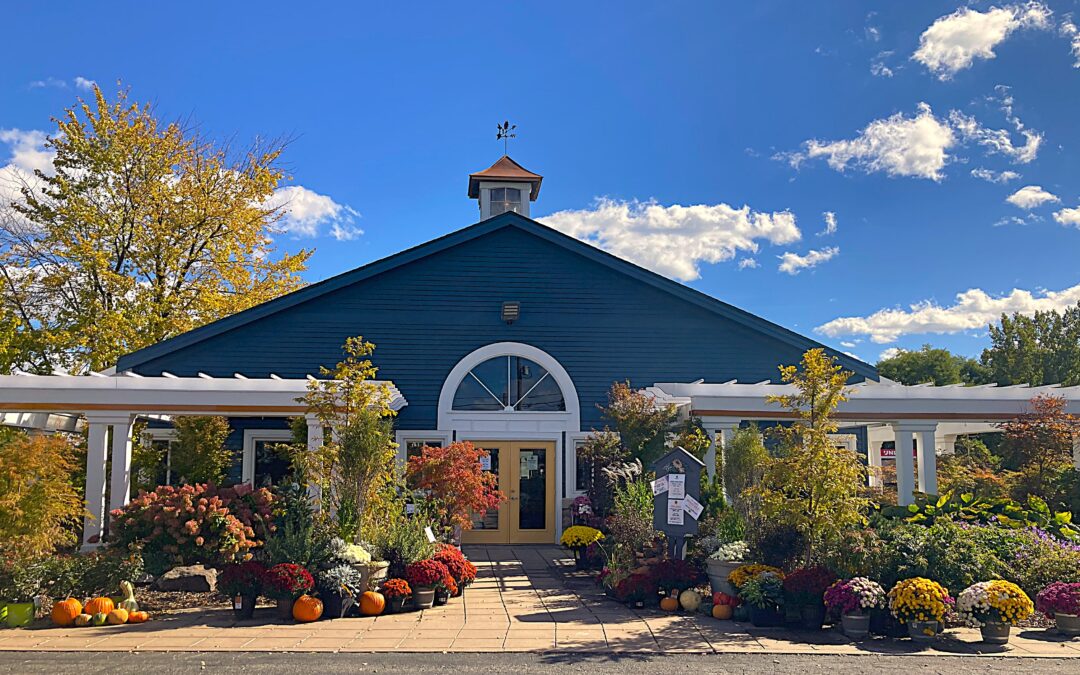


If your lawn took a beating over the summer, it’s sod to the rescue this fall. And, you’ll be glad you did the job now, come spring. Fall is one of the best times to lay sod. But in West Michigan’s Zone 6, the window is closing soon on sod season.
Whether replacing a whole yard or just a few spots, you’ll want to get your new grass down before the end of October. It needs at least a month to establish fully before the ground freezes solid. Kentucky Bluegrass, sold at Knapp Valley, is a prime example of an ideal cool-season sod, which thrives in cooler temperatures.
Do not panic if the weather drops sharply next month and the grass stops growing. Bluegrass is resilient. Even if it doesn’t fully root before winter, it will remain dormant and finish rooting the moment the soil warms up in early spring.
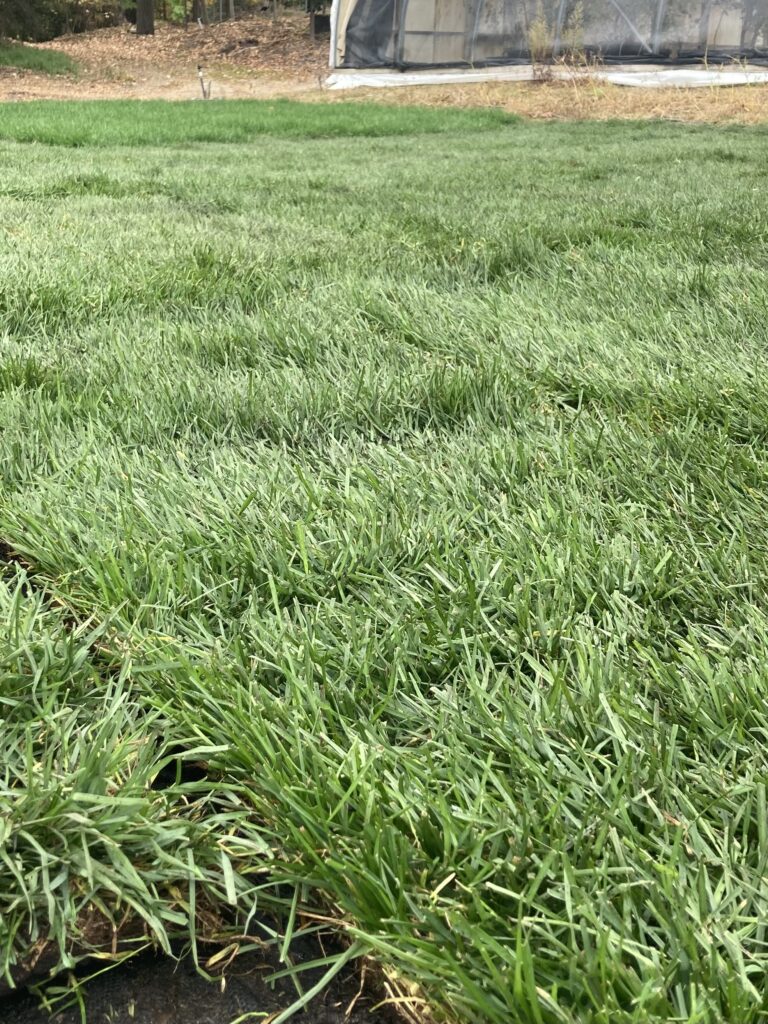
Compared to summer, cooler autumn temps reduce heat stress, moisture loss, and evaporation on new plantings. Yet soil is still warm enough to allow grass roots to grow and establish. The real bonus of sod laid in the fall is that it will go through winter dormancy and wake up early, ready to give you a lush green lawn in spring rather than waiting for your old lawn to recover from the previous summer.
Some things to keep in mind when planting in late fall rather than summer:
- You won’t need as much water. Evaporation is lower in the fall. Water deeply once a day in the late morning. Keep the soil moist to about 6 inches deep, but not muddy. Avoid watering in the late evening to prevent fungal issues from chilly nights.
- You won’t need to apply weed killers or fertilizers. The chemicals will only burn the delicate new roots without any real benefit at this time of year.
- You won’t need to mow. Growth slows down naturally this late in the season. But if the blades reach about 4 inches you can gently mow as long as sod is rooted enough to keep it in place.
This ease of care is another great reason why fall is one of the best times to lay sod!
Still, there’s one major thing you will need to do: keep those falling leaves off your new sod. A heavy blanket of wet leaves will smother the young blades of grass and block the sunlight they need to store energy for the winter.
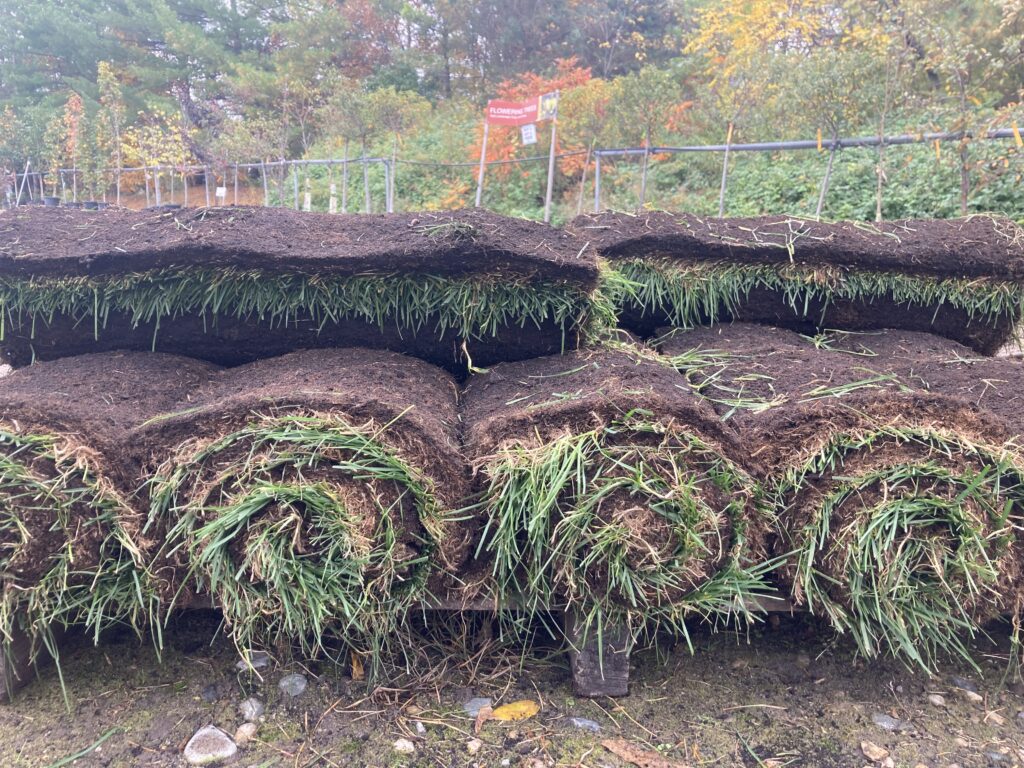
Before bringing your sod home you’ll need to prep:
- Remove old grass
- Till or loosen remaining dirt to about 6 inches deep
- Finish off with a couple inches of nice topsoil
- Rake it smooth so that the top of the soil lays about an inch below the adjacent surfaces
Now, go pick up your sod and get it in place:
- Start along a straight edge
- Stagger pieces like bricks
- Fit pieces tigtly together (try not to walk on new sod while working on it)
- Use a sharp knife or sod knife to cut around obstacles
- Press sod down with a lawn roller or by stepping on a large piece of plywood to connect the sod with the soil
Now, just follow watering tips from earlier in this blog, keep the leaves off and enjoy your lawn until the snow falls. Plus, look forward to being ahead of the game come spring!
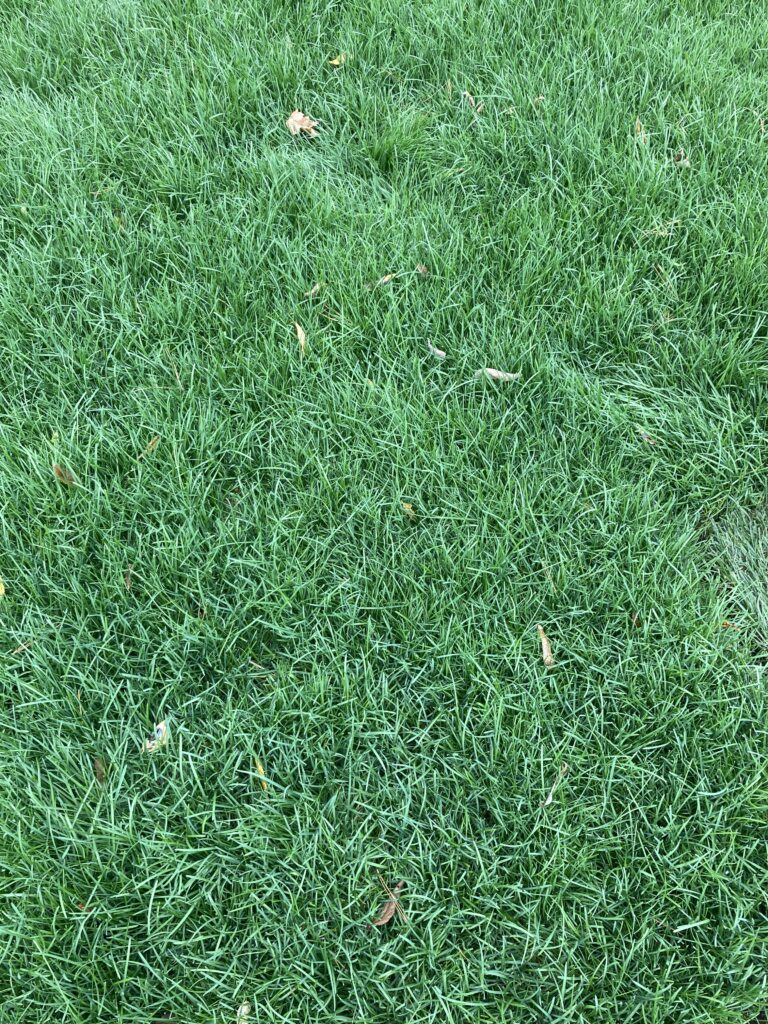
So grab your Kentucky Bluegrass sod at Knapp Valley Gardens for $8 per 10 square feet (5′ x 2′ piece). Our sod is laid out flat to keep it watered and moist, green and growing. We’ll roll it up and place it in your vehicle when you arrive. Need a larger quantity? Give us a head’s up and we’ll have it ready when you come in. Need 700 square feet or more? You can have it delivered to your home by the pallet. Check out the Sod page on this website, or inquire about sod pick-up or delivery by calling our Garden Center at (616) 363-8086.